


Asahi Co., Ltd. H1 FY2027 Earnings Report: Targeting a 26% Market Share Through High-Value Shifts and a Circular Business Model

StockClub
Published: Sep 25, 2026, 06:51 PM GMT+9
Sentiment Analysis

Executive Summary
Asahi Co., Ltd. , the operator of the "Cycle Base Asahi" specialty bicycle store chain, reported its financial results for the first half of the fiscal year ending February 2027. The company recorded net sales of ¥46,230 million (+0.7% YoY) , operating profit of ¥3,231 million (-14.0% YoY) , ordinary profit of ¥3,327 million (-15.2% YoY) , and net income of ¥2,193 million (-16.6% YoY) .
Amidst a domestic environment characterized by inflation-driven frugality and longer replacement cycles, Asahi achieved revenue growth and improved gross margins through the expansion of electric-assist bicycles , the growth of service areas such as parts and maintenance , and strategic price adjustments. However, the interim period saw a decline in profit due to increased SG&A expenses, driven by wage hikes for employees and proactive investments in human capital and store infrastructure for future growth.
For the full fiscal year, the company plans to accelerate OMO (Online Merges with Offline) initiatives, deepen CRM, and monetize stock-based and circular businesses such as reuse. Asahi projects full-year net sales of ¥86,278 million (+6.0% YoY) , operating profit of ¥4,300 million (+9.2% YoY) , and an annual dividend of ¥50 (maintaining a payout ratio of 35% or higher and a DOE target of 3%) .
1. Overview of H1 FY2027 Financial Results
Interim results benefited from a shift in the new bicycle sales mix and growth in service revenue, leading to an improvement in the gross profit margin to 47.2% (+0.4pt YoY) .
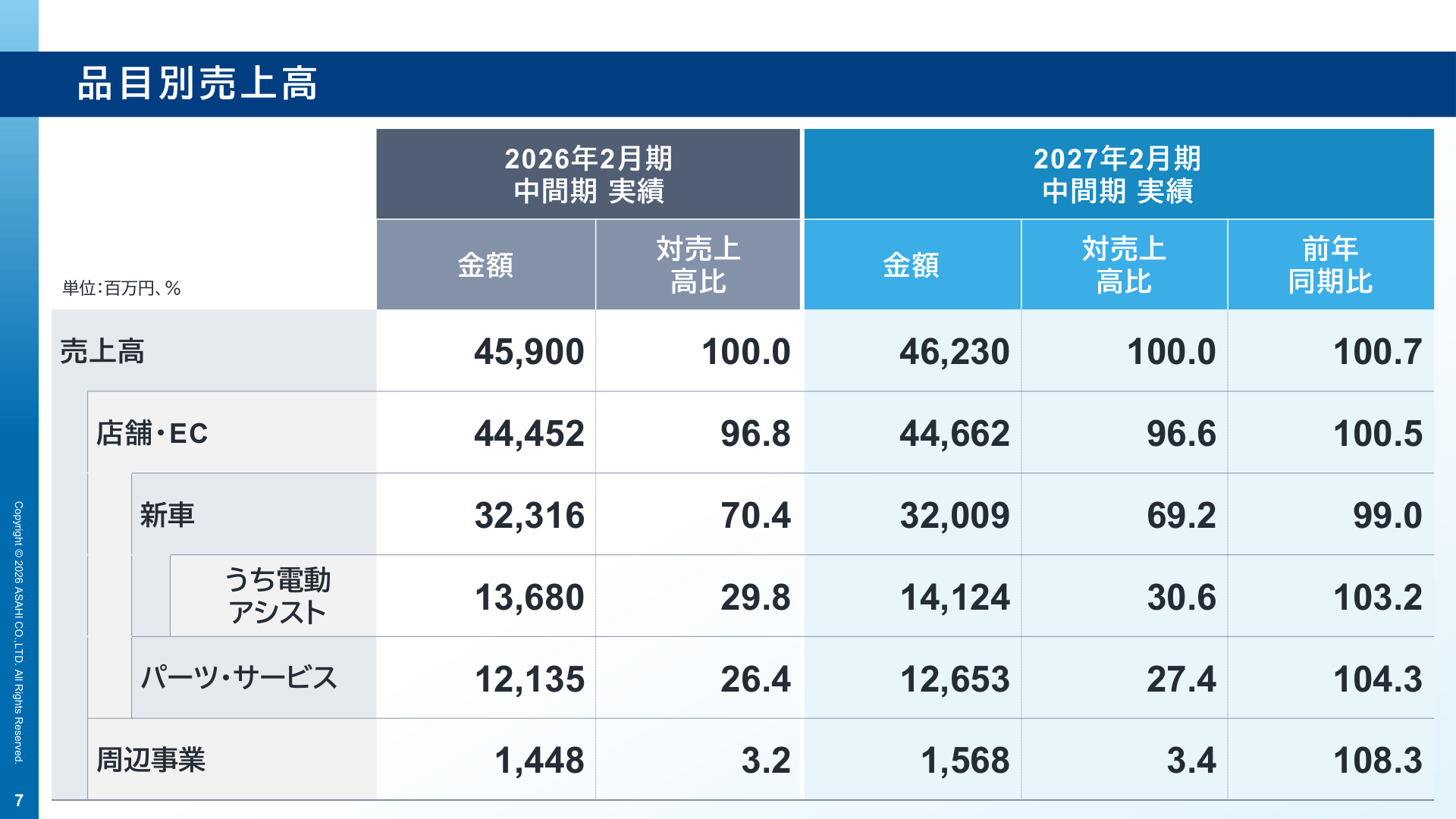
As shown in this performance slide, revenue was supported by steady sales of electric-assist bicycles and children's bikes , alongside an increase in parts, repair, and maintenance revenue that captured after-sales demand. Furthermore, agile price adjustments in response to procurement costs and exchange rate fluctuations resulted in a gross profit of ¥21,837 million (+1.6% YoY) .
On the profit side, results were impacted by an increase in fixed costs, primarily personnel expenses. Key performance metrics are as follows:
- Net Sales : ¥46,230 million (+0.7% YoY)
- Gross Profit : ¥21,837 million (+1.6% YoY, 47.2% of sales)
- Operating Profit : ¥3,231 million (-14.0% YoY, 7.0% of sales)
- Ordinary Profit : ¥3,327 million (-14.8% YoY, 7.2% of sales)
- Net Income : ¥2,193 million (-16.6% YoY, 4.7% of sales)
Regarding existing store performance, while net sales were 99.4% of the previous year and customer traffic was 98.0% , the average spend per customer remained on an upward trend at 101.4% , driven by a higher ratio of electric-assist bicycle sales and the optimization of labor rates.
2. Analysis of Profit Factors and Cost Structure
The ¥525 million decline in operating profit compared to the same period last year was due to an increase in SG&A expenses (-¥875 million), which outweighed the positive impacts of sales growth (+¥154 million) and cost reductions/product mix improvements (+¥196 million).
Breakdown of SG&A Expenses and Strategic Investments
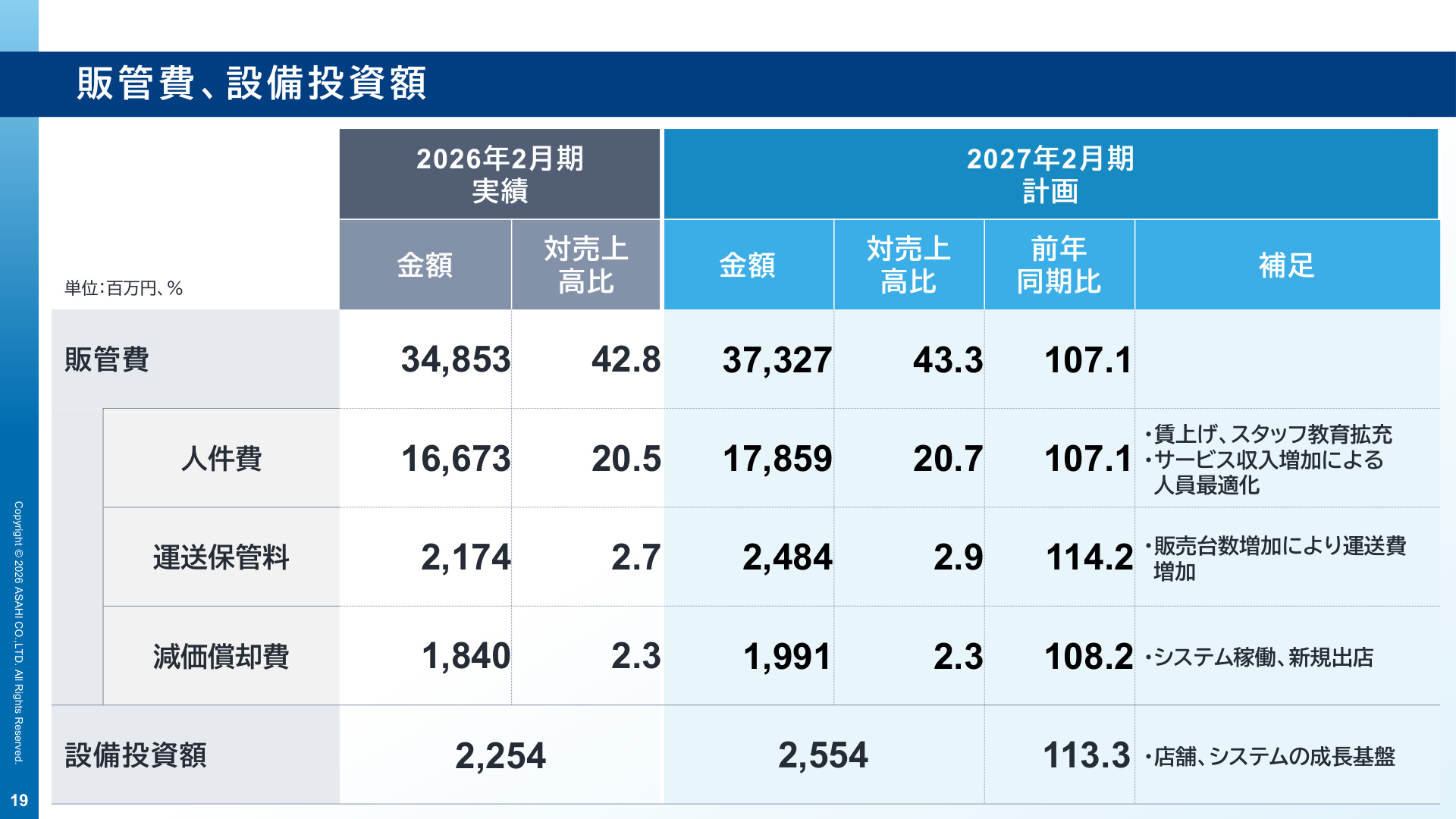
- Personnel Expenses : ¥8,940 million (+7.2% YoY) . Primarily due to base salary increases for sustainable growth and investments in human resource development to enhance service capabilities.
- Logistics and Storage Costs : ¥1,265 million (+2.5% YoY) .
- Depreciation : ¥904 million (+2.7% YoY) . Increased burden due to new store openings.
- Capital Expenditure : ¥832 million (-24.4% YoY) . The company scrutinized new store investments, prioritizing the revitalization of existing stores and IT/DX investments.
Regarding store network changes, the company opened 5 new stores (including 1 urban-style store) and closed 2 stores upon contract expiration during the interim period, bringing the total store count to 560 (including 15 urban-style and 19 franchise stores) at the end of the half.
3. Mid-Term Management Plan "VISION2028" and Circular/Stock-Based Growth Model
The company is accelerating its structural transformation from a "sell-and-forget" new bicycle model to a "circular and stock-based business model" that supports the entire bicycle life cycle of its customers.
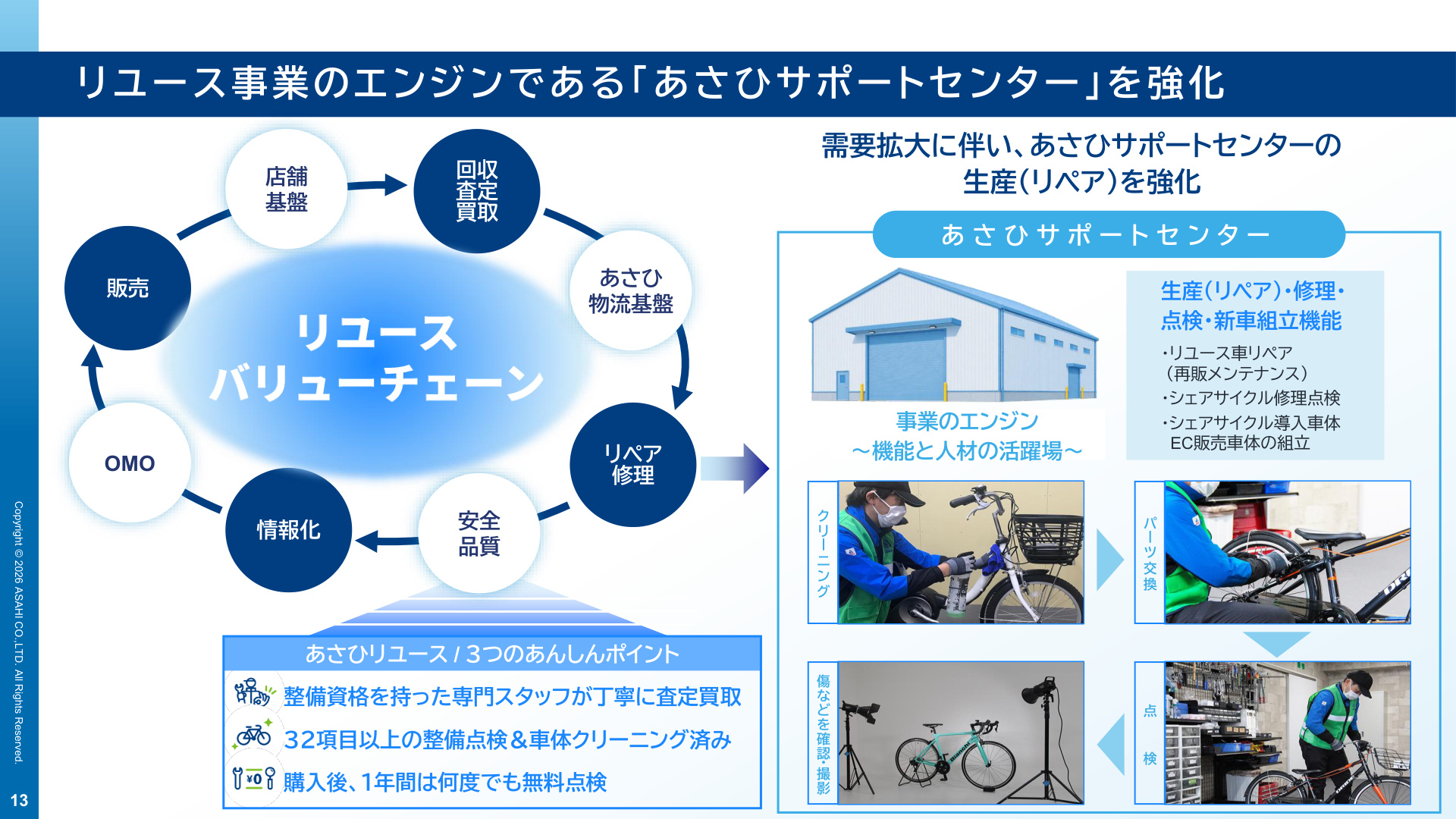
At the core of this model is the construction of the "Asahi Business Platform," an ecosystem targeting the approximately 60 million bicycles currently in use in Japan. It provides a one-stop service including not only new sales but also repairs, inspections, parts sales, bike washing, bike sharing, and reuse (buying and reselling).
Progress on Key Initiatives
- Deepening OMO and Strengthening CRM Leveraging the official "Cycle Base Asahi App" member base (approx. 5.23 million members), the company distributes periodic inspection and maintenance coupons. Through the "Asahi Maintenance Pack" and bike washing services (which saw a 4.5x increase in volume YoY) , the company is increasing store visit frequency to maximize customer LTV (Life Time Value).
- Establishing a Value Chain for the Reuse Business Strengthening the repair and remanufacturing system at the "Asahi Support Center." By adding 32-point inspections and cleaning by certified staff, along with a one-year free inspection benefit, the company is creating a second-hand market where customers can purchase with confidence.
- Revamping Private Brands (PB) Promoting the development of high-margin, high-function products by leveraging SPA (Specialty Store Retailer of Private Label Apparel) strengths, such as model changes for the "ENERSYS" electric-assist series and expanding the "LOUIS GARNEAU" brand lineup.
4. Full-Year FY2027 Outlook and Market Share Expansion
The full-year earnings forecast remains unchanged, with expectations for both revenue and profit growth.
In its full-year sales plan by category, the company aims to expand its domestic bicycle sales share from 25% in the previous fiscal year to 26% .
Full-Year Earnings Forecast (FY2027)
- Net Sales : ¥86,278 million (+6.0% YoY)
- Gross Profit : ¥41,627 million (+7.3% YoY, 48.2% of sales)
- Operating Profit : ¥4,300 million (+9.2% YoY, 5.0% of sales)
- Ordinary Profit : ¥4,440 million (+6.5% YoY, 5.1% of sales)
- Net Income : ¥2,730 million (+20.3% YoY, 3.2% of sales)
For the full-year operating profit increase plan (+¥363 million), the company expects price adjustments/cost reductions (+¥1,500 million) and improvements in the high-margin product mix (repairs/parts, +¥1,335 million) to absorb the increases in wages, new store fixed costs, and system costs (-¥2,473 million).
5. Capital Allocation Policy and Shareholder Returns
The company is committed to management that is conscious of the cost of capital and stock price, aiming to balance growth investment with shareholder returns.
- Annual Dividend : ¥50 per share (maintaining the same level as the previous fiscal year).
- Shareholder Return Policy : Based on a payout ratio of 35% or higher and a DOE (Dividend on Equity) target of 3% .
- Growth Investment : Planned annual capital expenditure of ¥2,554 million (+13.3% YoY) . The company plans to actively allocate funds to 10 new store openings (including 2 urban-style stores), 16 existing store renewals per year, and DX/system investments centered on logistics network optimization and CRM infrastructure.
This content is not intended as investment advice or a recommendation. Any opinions expressed are solely the personal views of each article.