

Covenant Logistics Eyes Higher-Return Growth as Freight Markets Recover
MarketBeat
Published: Aug 29, 2026, 09:03 AM
Sentiment Analysis
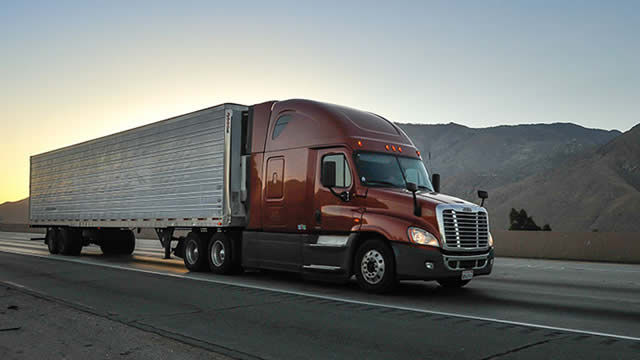
Covenant Logistics is repositioning toward specialized, higher-return freight, including dedicated trucking, managed freight, warehousing, poultry transportation and defense-related logistics, rather than pursuing growth through fleet expansion alone. Management expects freight conditions to improve through 2026 and may increase the fleet from roughly 2,200 tractors to 2,400–2,500 in 2027, potentially raising net capital expenditures to $80 million–$90 million. Acquired poultry and ammunition-transport operations have expanded significantly, while Covenant maintains a focus on shareholder returns through disciplined capital allocation, share repurchases and dividends; normalized EBITDA is estimated at about $150 million. Covenant Logistics Group NYSE: CVLG is pursuing a strategy centered on higher-return freight, diversified operations and disciplined capital allocation as freight-market conditions improve, Chief Financial Officer Tripp Grant said during a presentation hosted by Three Part Advisors. Grant said the trucking and logistics company has transformed from a primarily long-haul, asset-based carrier into a business with four operating segments: expedited, dedicated, managed freight and warehousing. The company operates about 2,200 tractors, more than 5 million square feet of warehouse space and employs nearly 5,000 people, including drivers, he said. Revenue is “a little over” $1 billion, with roughly 65% generated by asset-based operations, including expedited and dedicated trucking, and 35% from asset-light managed freight and warehousing operations, according to Grant. Grant described much of the trucking industry as commoditized, with operators frequently competing on rate, utilization and fleet size. Covenant’s strategy, he said, is to focus on specialized services where the company believes it can provide differentiated value and earn more consistent returns. “It’s easy to grow with bad revenue, but it’s hard to make money consistently,” Grant said. The company has emphasized dedicated contracts, where customers outsource transportation functions that they could otherwise operate internally. Grant said these arrangements can be more durable because customers requiring dedicated service throughout the year are less likely to rebid business annually. Managed freight consists primarily of asset-light brokerage and warehousing services. Grant said the warehousing business, while Covenant’s smallest segment, has expanded substantially over the past six years and is profitable. Grant said the freight recession lasted about three and a half years, beginning in the latter half of 2022 and continuing through 2025. He said capacity began leaving the market late in 2025 through increased regulatory enforcement and that market conditions have improved during 2026. Covenant expects conditions to continue improving through the remainder of the year, he said. Covenant has reduced its truck count substantially from prior years, operating about 3,700 trucks in 2006 and 3,000 in 2018 before reaching roughly 2,200 today. Grant said the company has sought to remove underperforming business rather than add trucks simply to grow revenue. “We said this business is too risky to have trucks on the road that are not returning capital,” Grant said, describing the company’s capital-allocation approach. Grant said Covenant may begin expanding its fleet to approximately 2,400 or 2,500 tractors in 2027, provided it can add the right type of business. The company expects particular growth in dedicated trucking, while also working to improve e...
Source: MarketBeat
This content is not intended as investment advice or a recommendation. Any opinions expressed are solely the personal views of each article.