

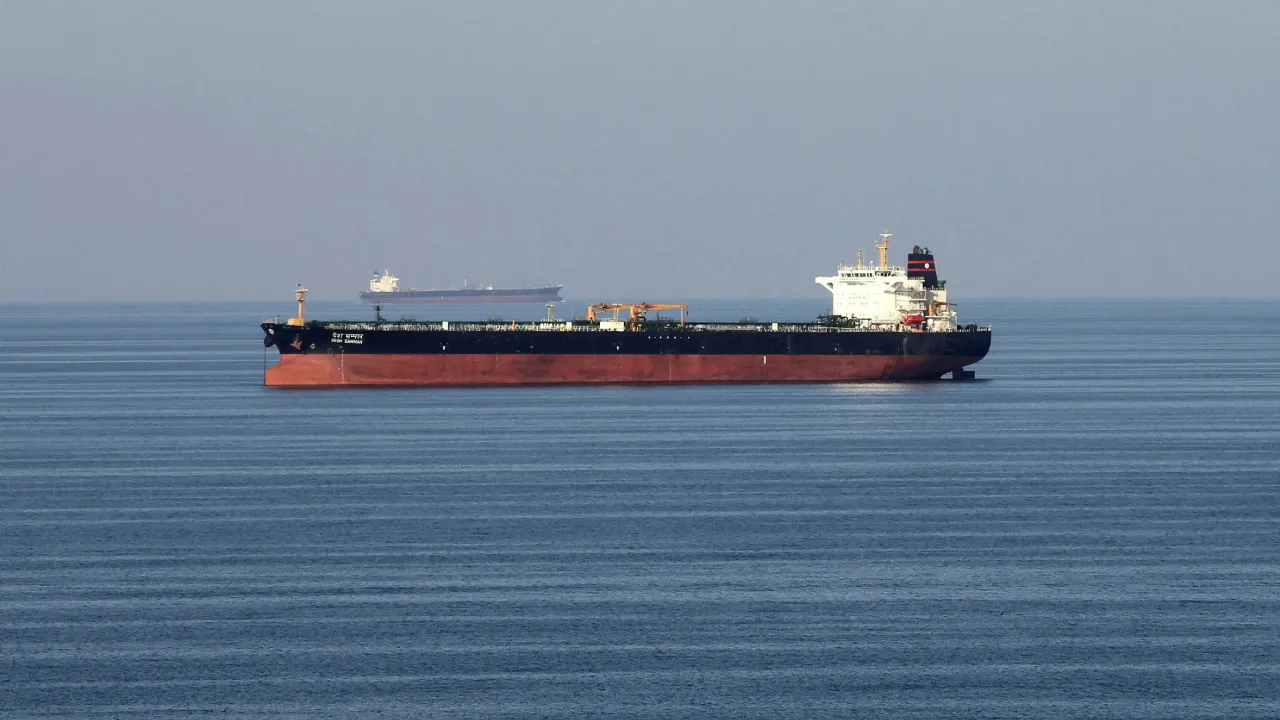
DOJ plans to revive maritime prize courts to seize Iranian oil tankers as war prizes: report
Fox Business
Published: Aug 28, 2026, 07:30 AM GMT+9
Sentiment Analysis
The Department of Justice is planning to reactivate maritime prize courts in an effort to make it easier to claim Iranian oil tankers as war prizes to help offset the cost of the war, according to a new report. Utilizing prize courts would give the government a clearer path to legally claiming ships seized by the U.S. Navy in the course of its enforcement of a naval blockade of Iran as the government's property. That process would allow the government to sell oil or other cargo from the ships that violated the blockade, and the proceeds would be provided to the Treasury Department.
"Our national security interests may require the United States military to seize vessels or cargo supporting the enemy during military conflict," U.S. Attorney for the Southern District of Texas Aaron Reitz said in a statement provided to FOX Business by the DOJ. "If that happens, our federal courts must be ready to adjudicate the disposition of these captured vessels and cargo. The U.S. may use prize courts to formally seize captured Iranian vessels, with their oil or other sold cargo helping to offset the cost of the war.
"Prize law is an ancient body of maritime law — already codified in statute but which we are now reviving — that sets the rules for how seized maritime property is condemned, returned or disposed of," Reitz continued. If the plan is put into effect, it will likely draw legal challenges from shipping companies that own vessels seized in the blockade, and the Bloomberg report noted that victims of Iranian terrorism may also pursue claims against seized assets.
The U.S. government has used prize courts to determine the legal status of ships and cargo that were captured since the nation's founding, starting with the Revolutionary War, though the practice hasn't been actively used since the Spanish-American War in the late 1800s. Under the early frameworks, ships and cargo that were legally captured were sold with the proceeds going to the crew of the ship that seized the condemned vessel. However, that practice ended in 1899 as the U.S. military looked to reduce privateering and modernize legal frameworks for war.
Prize courts declined amid the evolution of naval warfare. The emergence of submarines in World War I, as well as the proliferation of their use in World War II, when air power emerged as another major threat to naval vessels, made it more difficult in practice for naval crews to stop and board a given vessel, inspect its cargo, then return it to a port for trial.
A 2022 report by the Congressional Research Service notes that Congress has given the exclusive jurisdiction over prize cases to federal district courts that are "sitting in admiralty," a legal term for when the judge is handling a specialized maritime case rather than a typical civil or criminal case. That process ordinarily requires the vessel to be physically brought into a given district court's jurisdiction. During World War II, a 1942 law gave federal courts authority over prize cases involving ships in allied ports, such as those in Australia or Great Britain, without having to return to the U.S. Despite that change, an analysis by th...
Source: Fox Business
This content is not intended as investment advice or a recommendation. Any opinions expressed are solely the personal views of each article.