


CRG Holdings Q3 FY2026 Earnings Analysis: Progress in Structural Reform, Dramatic Financial Strengthening, and Enhanced Shareholder Returns

StockClub
Published: Aug 14, 2026, 12:19 PM
Sentiment Analysis

CRG Holdings (Ticker: 7041) reported its Q3 results for the fiscal year ending September 2026, demonstrating a successful business portfolio restructuring following the deconsolidation of its non-core financial business. Despite this transition, the company maintained stable revenue through growth in its core HR and manufacturing-related segments, while simultaneously achieving a dramatic improvement in its financial position and expanding shareholder returns.
This report provides a comprehensive analysis of the earnings, focusing on 10 key topics derived from the financial disclosures, including performance highlights, segment-specific details, financial structural reforms, and future growth strategies.
1. Overview of Q3 FY2026 Consolidated Results
For the first nine months of the fiscal year, consolidated results were as follows: Net Sales of 12,494 million yen (down 0.3% YoY) , Operating Profit of 185 million yen (down 21.9% YoY) , Ordinary Profit of 114 million yen (down 37.9% YoY) , and a Net Loss attributable to owners of the parent of 12 million yen (compared to a profit of 69 million yen in the same period last year).
While the results may appear to show a decline, this is primarily due to the deconsolidation of the financial business , which was included in the previous fiscal year. The core HR-related and manufacturing-related businesses have effectively maintained a growth trend, indicating that the underlying profitability of the core operations remains robust.
Furthermore, the net loss recorded for the period was a result of one-time refinancing costs and tax effects recognized in the first half. These are non-recurring costs associated with financial structural reform and do not impair the company's fundamental ability to generate operating cash flow.
2. Segment Performance: Manufacturing Breakthrough and HR Structural Shift
Looking at segment performance, the total profit across reporting segments increased from 147 million yen in the same period last year to 231 million yen . Group synergies and strategic initiatives are steadily yielding results.
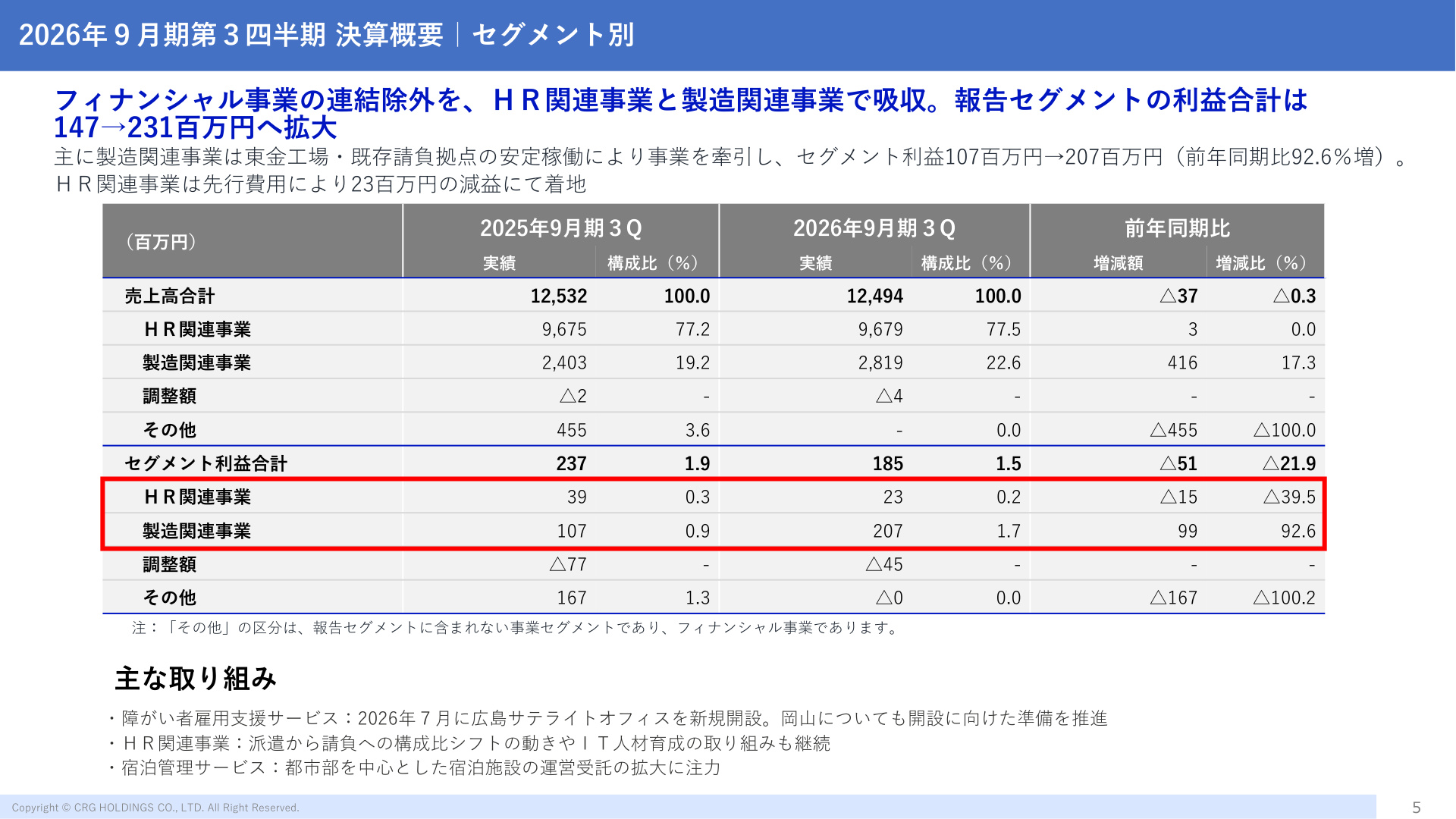
As shown in the segment performance table above, the manufacturing-related business is the primary driver of overall performance. This segment achieved significant growth, with revenue reaching 2,819 million yen (up 17.3% YoY) and segment profit hitting 207 million yen (up 92.6% YoY) . The stable operation of the Togane City manufacturing plant in Chiba Prefecture , which was completed in September 2024, combined with increased utilization rates at existing manufacturing contract sites, contributed to these higher margins.
Meanwhile, the largest segment, HR-related business , reported revenue of 9,679 million yen (flat YoY) and a segment profit of 23 million yen (down 39.5% YoY) . The decline in profit is attributed to upfront costs associated with shifting from a traditional temporary staffing model to a high-value-added contracting model , as well as aggressive investment in new areas. Specifically, costs were incurred for the opening of new satellite offices for disability employment support services (with preparations underway for Hiroshima and Okayama as of July 2026) and the development of infrastructure to expand the management of urban lodging properties .
3. Significant Improvement in Financial Foundation and Refinancing Success
One of the most significant topics in this earnings report is the strengthening of the balance sheet through refinancing.
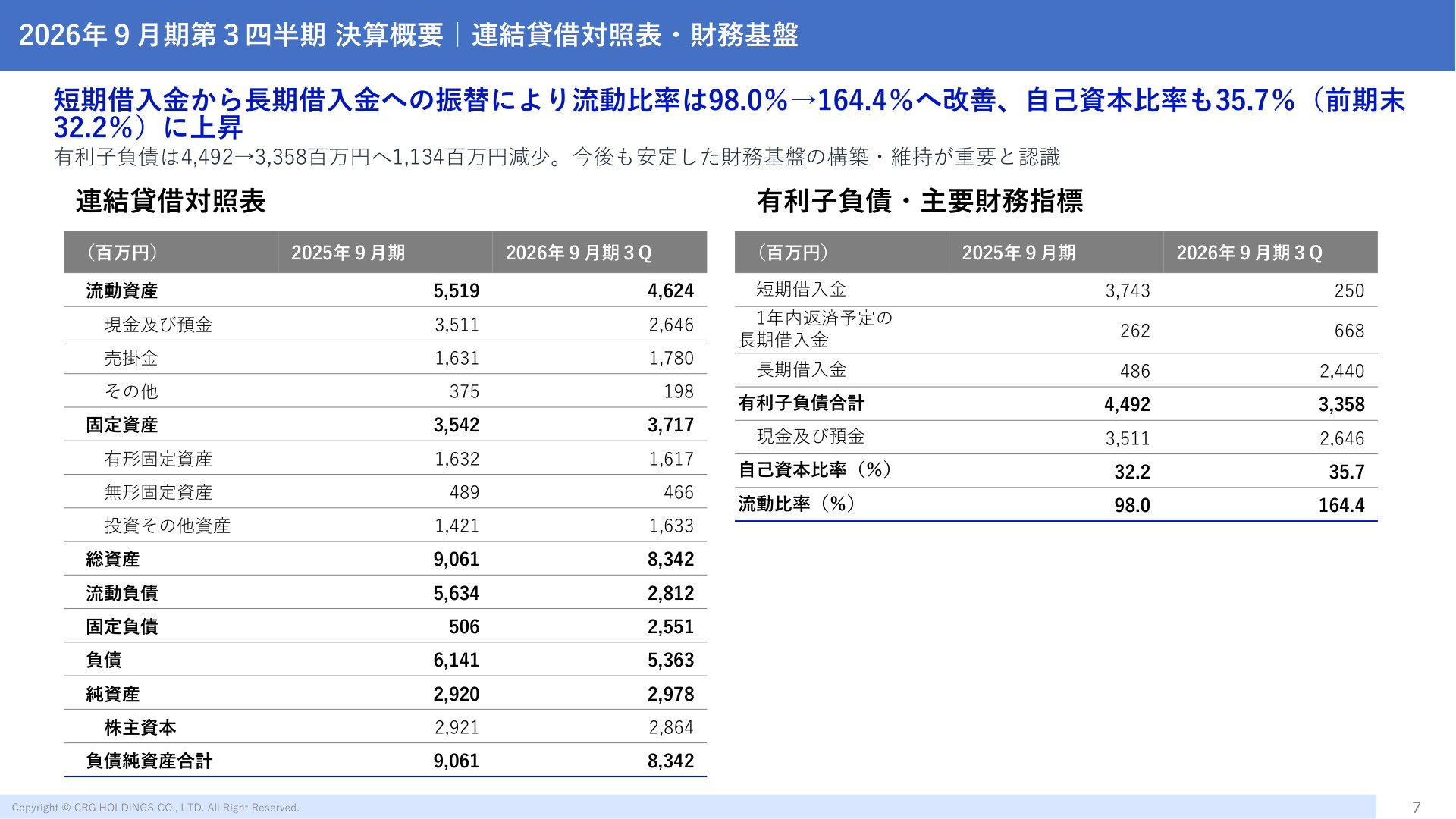
As the financial data above indicates, total interest-bearing debt was reduced by 1,134 million yen , from 4,492 million yen at the end of the previous fiscal year to 3,358 million yen . A more critical change is the composition of the debt. The company significantly reduced short-term borrowings from 3,743 million yen to 250 million yen , shifting the majority into long-term debt (2,440 million yen).
By diversifying and extending the repayment schedule, the company has significantly improved its financial safety indicators. The current ratio, which measures liquidity, jumped from 98.0% to 164.4% , demonstrating a substantial increase in safety. Additionally, the equity ratio rose by 3.5 percentage points, from 32.2% to 35.7% , dramatically reducing financial risks associated with business operations.
4. Proactive Shareholder Returns: Dividend Maintenance and Digital Gift Program
Following the stabilization of its financial foundation, the company has announced a policy to further enhance shareholder returns.
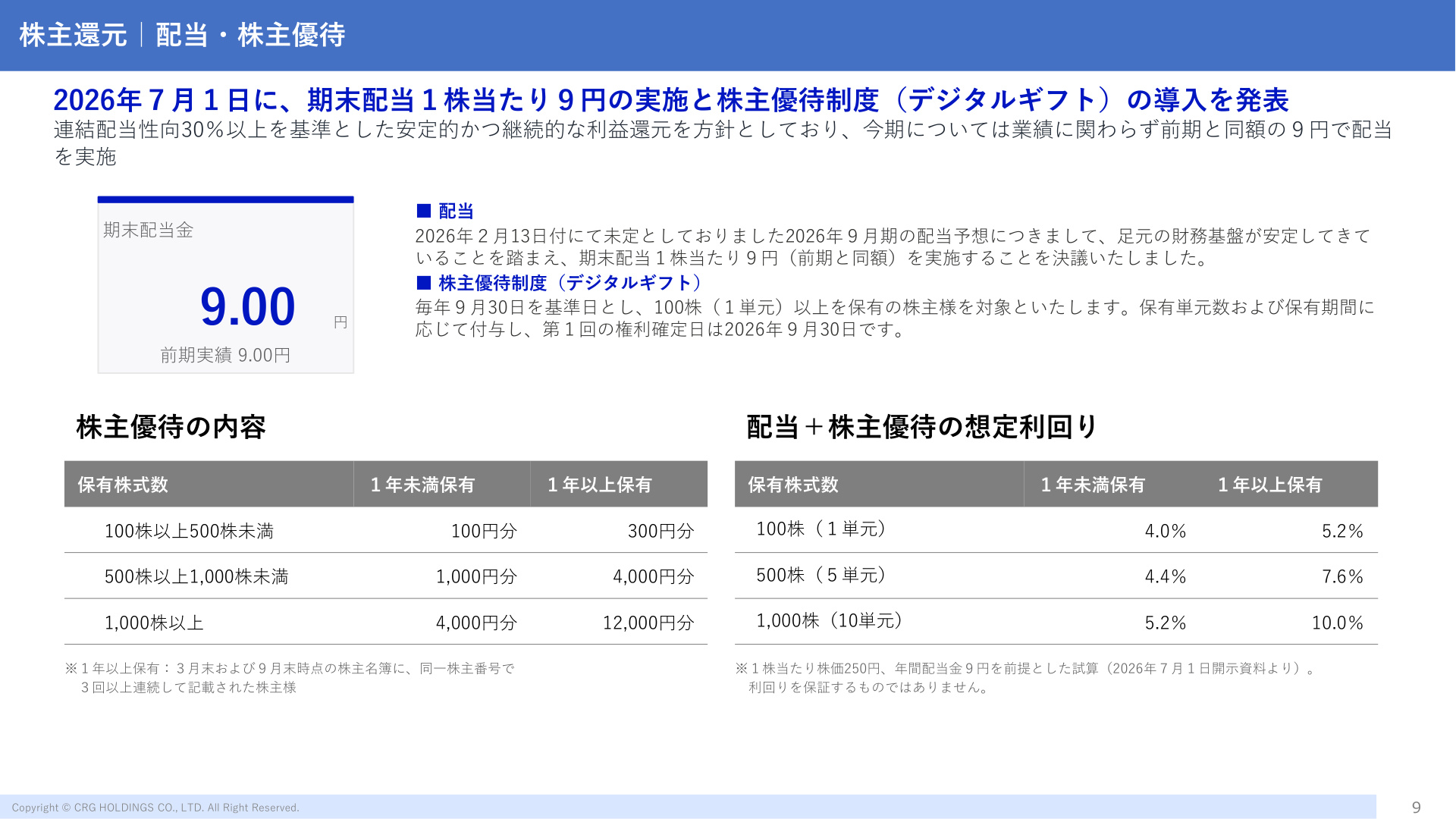
As announced on July 1, 2026, the company decided to set the year-end dividend forecast for the fiscal year ending September 2026 at 9.00 yen per share (the same as the previous fiscal year) . The company maintains a basic policy of stable dividends based on a consolidated payout ratio of 30% or more, demonstrating its commitment to prioritizing shareholder returns even during a transitional period.
Furthermore, to increase the attractiveness of its stock and encourage long-term holding, the company has introduced a shareholder benefit program (digital gifts) . Shareholders holding at least 100 shares (one unit) as of September 30 each year will receive digital gifts based on the number of shares held and the duration of ownership. The program offers generous incentives for long-term holders, such as 300 yen worth of gifts for holding 100 shares for over a year, and up to 12,000 yen worth for holding 1,000 shares for over a year.
5. Progress Toward Full-Year Forecasts and Future Growth Strategy
The full-year earnings forecast for the fiscal year ending September 2026 remains unchanged, with net sales of 18,000 million yen, operating profit of 300 million yen, ordinary profit of 250 million yen, and net profit of 100 million yen.
As of the third quarter, the progress rates against the plan are 69.4% for net sales , 61.7% for operating profit , and 45.7% for ordinary profit . The lag in ordinary profit is due to the aforementioned one-time refinancing costs incurred in the first half. The company plans to catch up through the shift from staffing to higher-margin contracting and the expansion of lodging management and disability employment support services.
Additionally, the company is advancing an AI agent utilization roadmap as a pillar for long-term competitiveness. It is sequentially implementing measures across three phases to thoroughly streamline internal operations, aiming to improve productivity and eventually build new service models incorporating AI technology.
Conclusion and Future Outlook
CRG Holdings' Q3 FY2026 results strongly underscore that the company has completed a fundamental reform of its financial structure through portfolio restructuring and refinancing, successfully laying the groundwork for its next growth phase.
Key points to watch moving forward include:
- Maintaining high utilization rates at the Togane plant and existing sites in the manufacturing segment, and further improving profit margins.
- A V-shaped recovery in segment profit for the HR-related business as the shift from temporary staffing to the contracting model is completed.
- The effectiveness of company-wide cost structure reviews and productivity innovation through the introduction of AI agents.
We will continue to monitor how the company's growth story, which balances enhanced profitability with high-yield shareholder returns, unfolds.
This content is not intended as investment advice or a recommendation. Any opinions expressed are solely the personal views of each article.