

Intermestic (262A) H1 FY2026 Earnings Deep Dive: A Growth Story Driven by VH Consolidation and Zoff Business Expansion

StockClub
Published: Aug 07, 2026, 10:12 AM
Sentiment Analysis

1. Earnings Overview and Consolidated Highlights
Intermestic Inc. (Ticker: 262A) achieved significant year-on-year growth in both revenue and profit for the first half (H1) of the fiscal year ending December 2026, driven by the consolidation of Visionary Holdings (VH) and the robust expansion of its core "Zoff" business.
For the H1 period, consolidated net sales reached 43.3 billion yen (+80.7% YoY) , consolidated operating profit was 4.95 billion yen (+33.9% YoY) , consolidated ordinary profit was 4.70 billion yen (+27.3% YoY) , and net profit attributable to owners of the parent was 2.90 billion yen (+15.0% YoY) . Furthermore, EBITDA , a key indicator of cash-generating capability, reached 6.56 billion yen (+55.9% YoY) .
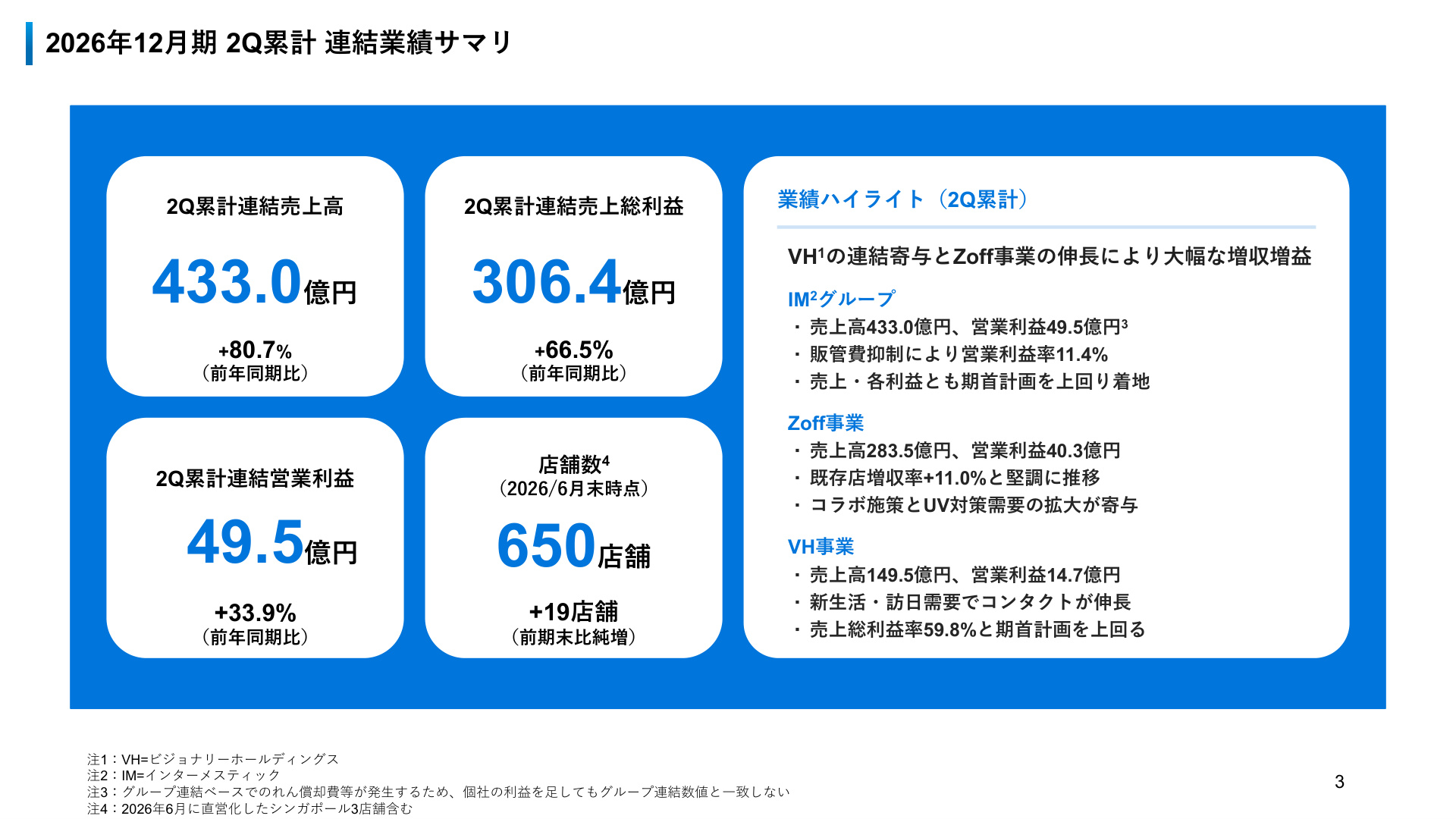
As shown in the slide summary above, the results exceeded the initial H1 guidance (net sales of 41.47 billion yen, operating profit of 3.54 billion yen) by 4.4% in net sales and 39.8% in operating profit . The primary drivers for this strong performance are twofold:
- Solid same-store sales growth in the Zoff business and strong performance of high-unit-price products (increased demand for UV-protection and photochromic lenses, and successful collaboration initiatives).
- Revenue and profit contributions from the newly consolidated VH business , alongside rigorous control of SG&A expenses and steady growth in contact lens sales.
Although the gross profit margin declined from 76.8% in the same period last year to 70.8% due to the increased proportion of contact lens sales, this was in line with the internal plan (70.6%). By limiting the SG&A expense ratio to 59.3% (0.2 percentage points below plan) , the company achieved exceptionally high profit growth.
2. Analysis of Segment Performance
(1) Zoff Business: Branding and Product Strategy Yield Results
H1 net sales for the Zoff business were 28.35 billion yen (+18.3% YoY, +4.7% vs. plan) , and operating profit was 4.03 billion yen (+8.9% YoY, +20.5% vs. plan) .
- Same-Store Sales Trends : The same-store sales growth rate for H1 remained in double digits at +11.0% (Q1: +11.5%, Q2: +10.5%). While monthly growth dipped to +0.1% in June due to typhoons and adverse weather, the strong performance in April (+12.5%) and May (+19.1%) offset the impact.
- Product and Marketing Initiatives : CM campaigns featuring Ren Meguro for photochromic lenses with blue-light-cut functionality and the "25th Anniversary Fair" were successful, boosting both customer traffic and average spend. Notably, the paid lens purchase rate rose to 64.8% .
- Rapid Growth in E-commerce : E-commerce sales showed remarkable growth, reaching 2.471 billion yen (+50.8% YoY) . Exclusive and early-access collaboration campaigns with IPs such as "Dragon Quest" and "Nijisanji" strongly stimulated purchasing interest among younger demographics and fans.
(2) VH Business (Megane Super, etc.): Establishing a New Growth Engine
Contributing fully from this period, the VH business reported H1 net sales of 14.95 billion yen (+3.9% vs. plan) and operating profit of 14.7 billion yen (+74.9% vs. plan) .
Capturing demand from new lifestyle trends and inbound tourism, sales of contact lenses and sunglasses performed exceptionally well. The gross profit margin exceeded expectations at 59.8% (+0.8 points vs. plan), and by improving the SG&A-to-sales ratio to 50.0% (3.2 points below plan) , the segment generated profits significantly above the initial forecast.
3. Store Network and Global Expansion
The group is executing a planned store opening strategy. During the H1 period, the group opened 18 new stores (14 in the Zoff business, 4 in the VH business) , resulting in a net increase of 16 stores after accounting for 2 closures.
As of the end of June 2026, the total number of group stores reached 650 (647 in Japan, 3 overseas) .
Regarding global expansion, the company converted three existing franchise stores in Singapore (ION Orchard, Jurong Point, and Orchard Central) into directly operated stores in June 2026. This allows for direct control over marketing and operations in the Southeast Asian market, establishing a robust foundation for future full-scale international expansion.
4. Synergy Creation and LTV Maximization Strategy via VH Integration
The integration of Intermestic and VH goes beyond mere scale expansion, creating a perfectly complementary relationship in customer segments and product offerings .
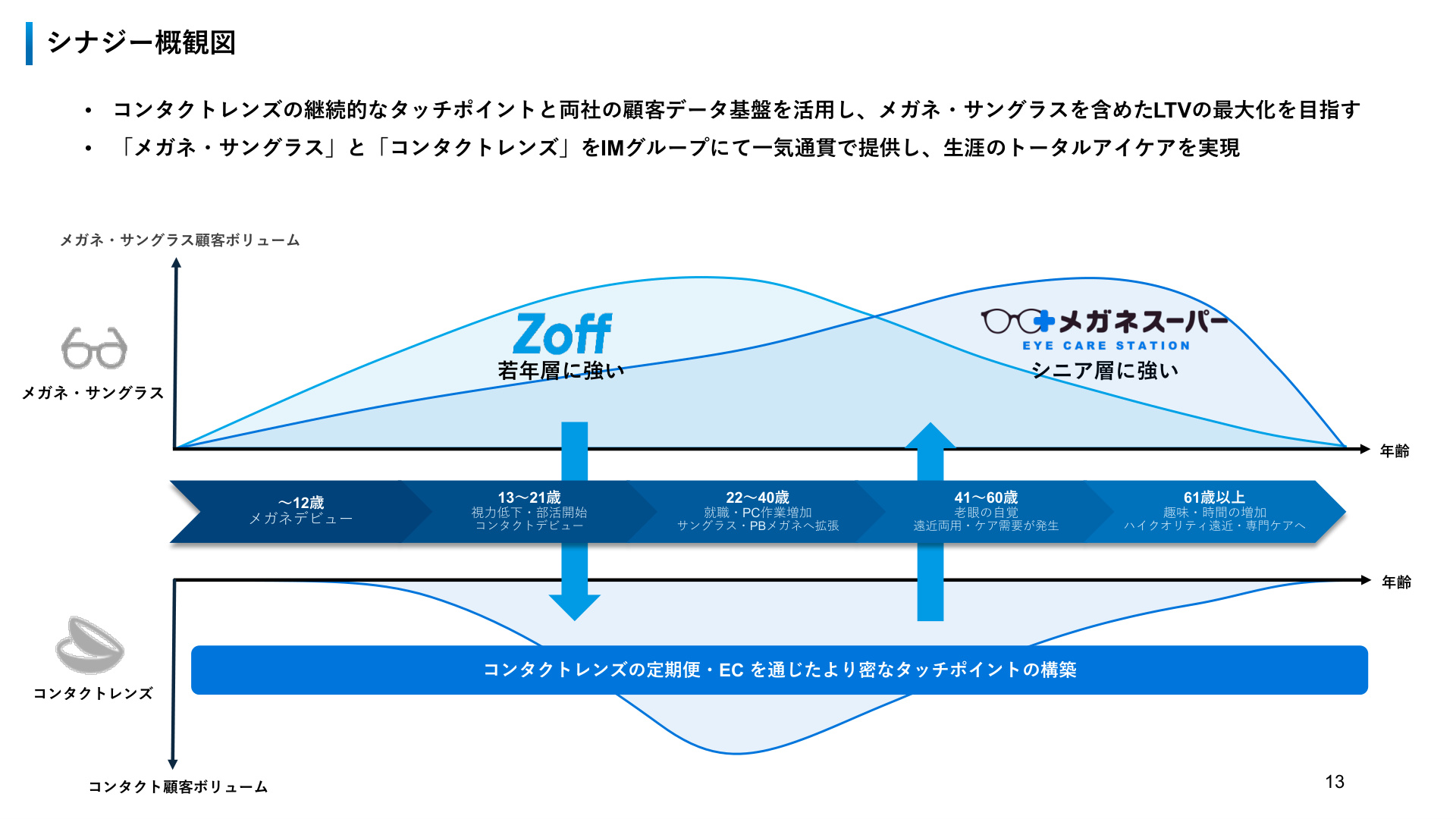
As illustrated in the "Synergy Overview" slide above, the integration has significantly broadened the customer age range and purchasing touchpoints.
- Complementary Customer Segments : The Zoff business holds overwhelming strength among younger demographics (teens to 30s) , capturing demand for "first glasses" and fashion items. Conversely, the VH business, which operates Megane Super, is strong among seniors (40s to 60s and older) , meeting needs for progressive lenses, eye care, and professional vision testing.
- Expansion of Products and Touchpoints : By incorporating the contact lens business (subscription/e-commerce) held by VH, the company can maintain continuous customer touchpoints through contact lenses even during the intervals between glasses purchases (typically every 2–3 years).
Regarding the roadmap for synergy realization , the company is currently in the "Cost Synergy Phase," focusing on consolidating head office management costs and cross-selling products like UV-protection items. Moving forward, the company will transition to a revenue synergy phase, integrating customer databases and promoting mutual store referrals to "maximize LTV (Life Time Value)" by supporting customers' eye health throughout their lives.
5. Cost Structure and Business Model by Product Category
Understanding the different cost structures and profit characteristics of each product category is essential to grasping the company's strengths.
- Glasses (PB / SPA Model) : The Specialty Store Retailer of Private Label Apparel (SPA) model ensures very high gross margins . While labor costs are higher due to the need for attentive in-store service, processing, and fitting, these are absorbed by the high gross profit, generating substantial operating income.
- Contact Lenses (NB Model) : As these are sourced from manufacturers, gross margins are lower than those for glasses. However, they offer the advantage of extremely low labor and SG&A burdens, as no in-store processing is required and service time is shorter . High repeat purchase rates enable efficient profit generation.
By balancing high-margin "glasses" with high-turnover, low-cost "contact lenses," the group has significantly improved its overall capital efficiency and profit stability.
6. Market Opportunity Expansion and Mid-to-Long-Term Growth Strategy
The acquisition of VH has dramatically expanded the market segments accessible to Intermestic.
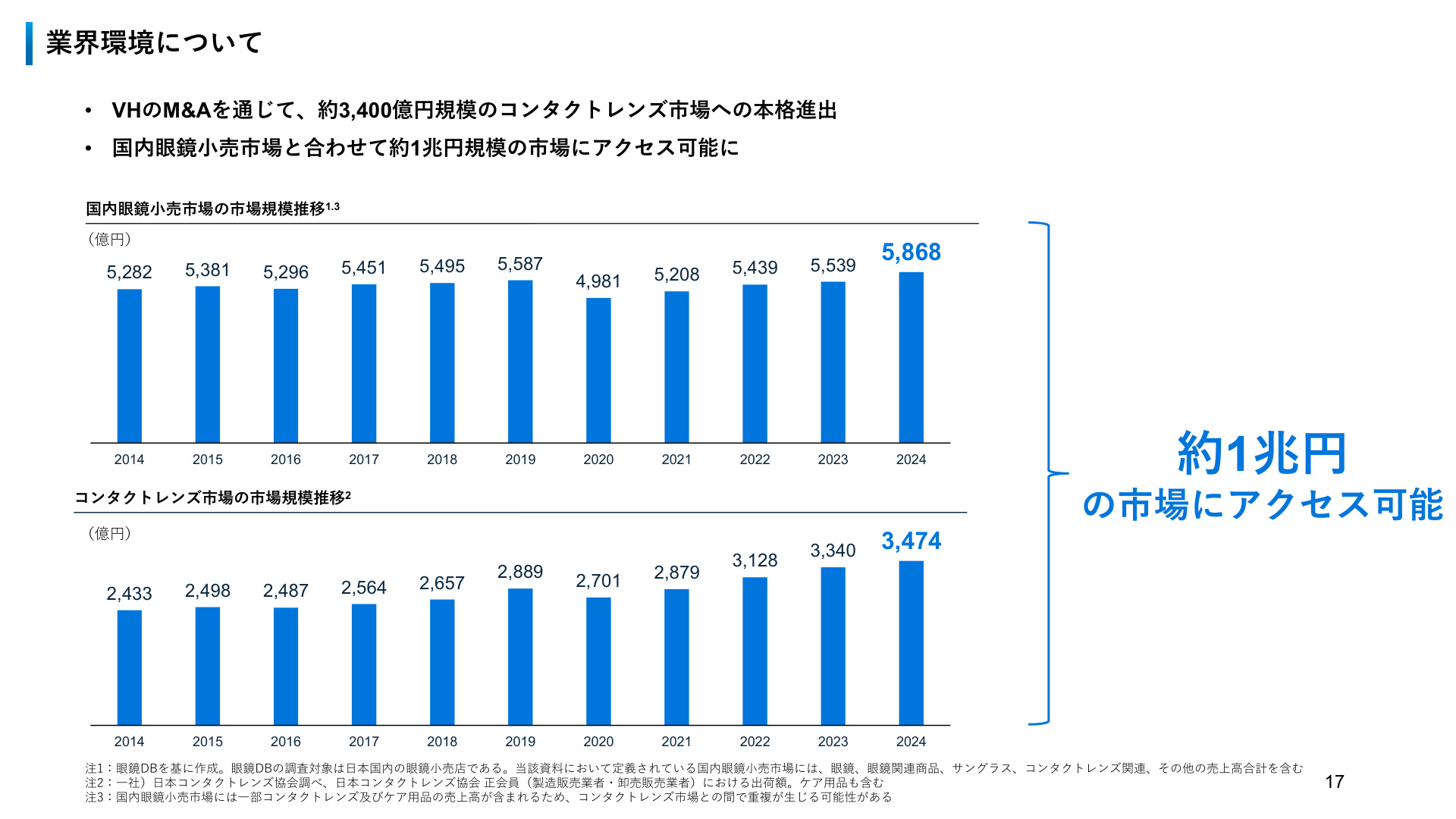
In addition to the domestic eyewear retail market (approx. 586.8 billion yen) , the company has entered the contact lens market (approx. 347.4 billion yen) , establishing a position that allows access to the entire eye care market, totaling approximately 1 trillion yen .
To accelerate growth within this massive market, the following priority strategies are being promoted:
(1) Creating New Demand through the "For Eyes, For the Future Project"
Beyond simple vision correction, the company is conducting awareness campaigns for children's eye health and UV protection. With initiatives such as pilot programs for wearing sunglasses in approximately 30 junior and senior high schools nationwide, the company has set a target to increase the sunglasses usage rate in Japan from 24.5% to 50.0% by 2030 and to expand the number of schools adopting designated sunglasses to 4,000 , actively creating new culture and markets.
(2) Development of New Formats and Concept Stores
In July 2026, the company opened "AGREE CULTURE by Zoff" at Abeno Q's Mall, a concept store rooted in empathy. It offers purchasing experiences that transcend traditional eyewear stores, such as custom experiences for rimless frames (PLAY WITH RIMLESS) and a collection of diverse character collaborations.
(3) Promotion of DX and Internal AI Utilization
In the Zoff business, the company utilizes in-store AI cameras for foot traffic analysis and aggregates purchase history to make data-driven decisions. Weekly internal AI utilization rates exceed 95% , and processes such as demand forecasting, product development, and the acceleration/efficiency of head office operations have become deeply embedded across the company.
7. Capital Policy and Shareholder Returns
The company maintains a cash flow allocation policy that balances growth investment with shareholder returns. Using stable operating cash flow as the source, the company aims to secure funds for growth investments in existing businesses and M&A, while continuing to implement stable shareholder returns with a target dividend payout ratio of 30% to 35% .
This content is not intended as investment advice or a recommendation. Any opinions expressed are solely the personal views of each article.