


Yamaha (7951) Q1 FY2027 Earnings Analysis: Profitability Gains Driven by Electronic Musical Instrument Recovery and Price Optimization

StockClub
Published: Aug 04, 2026, 10:07 AM
Sentiment Analysis

Yamaha Corporation (Securities Code: 7951) reported significant growth in both revenue and profit for the first quarter of the fiscal year ending March 2027 (announced August 4, 2026), bolstered by a recovery in sales within the core Musical Instruments segment and the tailwinds of a weaker yen . This report provides a comprehensive analysis of the earnings highlights, structural drivers of profit growth, segment and regional performance, the rationale behind the full-year forecast revision, and mid-to-long-term capital efficiency initiatives.
1. Q1 Earnings Highlights
Consolidated results for the first quarter significantly outperformed the previous year across both revenue and profit metrics.
- Revenue : ¥116.3 billion (+12.0% YoY / +2.9% on a currency-neutral basis)
- Core Operating Profit : ¥9.3 billion (+97.7% YoY / Core operating margin expanded from 4.5% to 8.0% )
- Profit Attributable to Owners of Parent : ¥10.7 billion (+348.8% YoY)
Exchange rates averaged ¥160 per USD (a depreciation of ¥15 YoY) and ¥185 per EUR (a depreciation of ¥21 YoY), providing a positive impact of ¥9.6 billion on revenue and ¥3.0 billion on core operating profit. However, even excluding currency effects, the company achieved organic revenue growth, signaling a fundamental recovery in its core business.
2. Analysis of Core Operating Profit Variance
The substantial expansion in core operating profit from ¥4.7 billion in the same period last year to ¥9.3 billion was driven by more than just currency effects. After absorbing rising costs, price optimization initiatives and improved model mix served as powerful catalysts for profit growth.
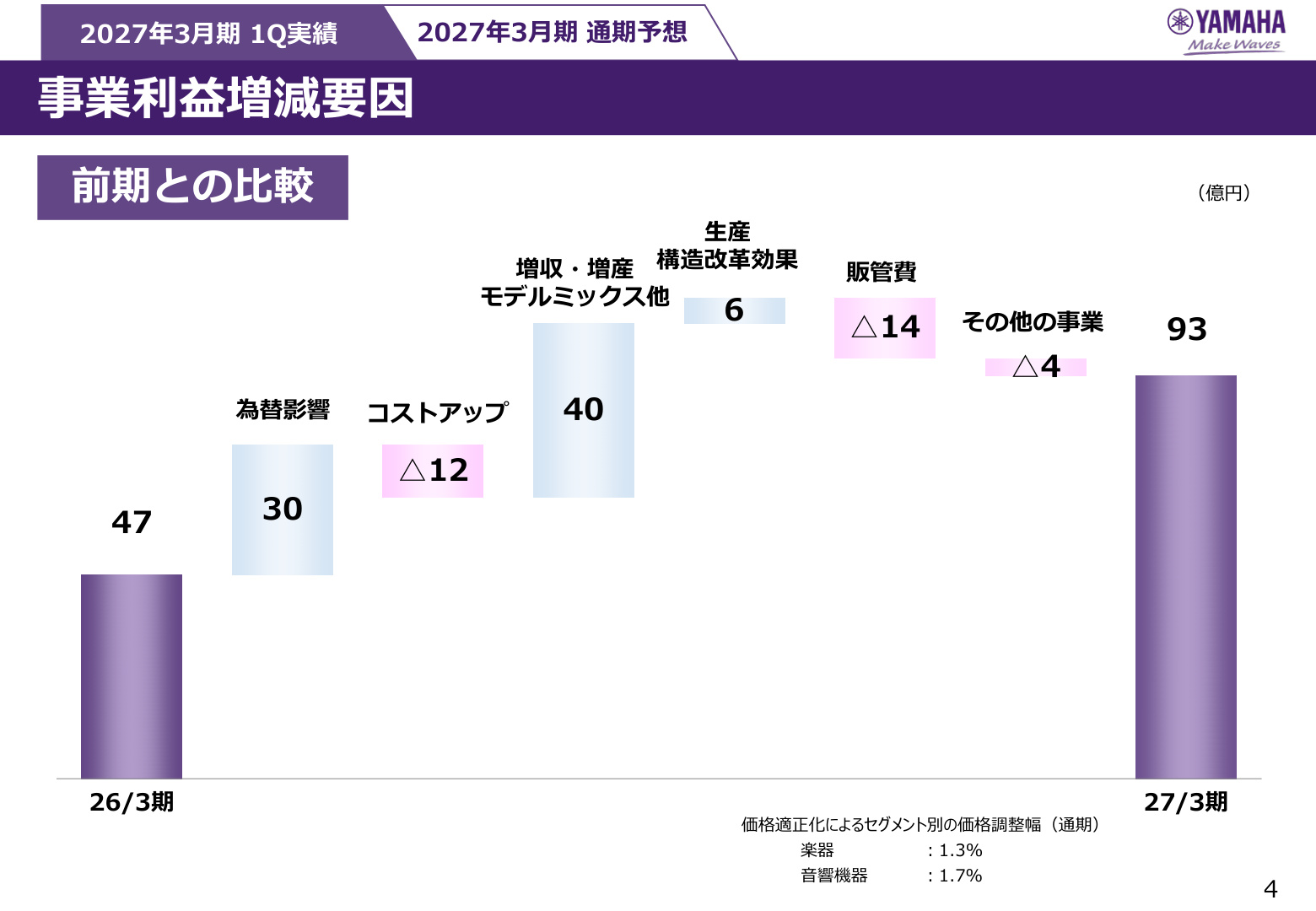
The slide above illustrates the breakdown of the ¥4.6 billion year-on-year increase in core operating profit. Key factors identified include:
- Revenue Growth, Production Volume, and Model Mix (+¥4.0 billion) : The largest contributor to profit growth. The launch of new products, particularly in electronic musical instruments, and an increased ratio of high-end models were significant drivers.
- Currency Impact (+¥3.0 billion) : The depreciation of the yen against the US dollar and the euro directly boosted operating profit.
- Production Structural Reform (+¥0.6 billion) : Efficiency gains in factory production lines and cost-reduction efforts are yielding steady results.
- Cost Increases (-¥1.2 billion) : Rising procurement costs and increased labor expenses acted as headwinds.
- Increase in SG&A Expenses (-¥1.4 billion) : Higher promotional and general administrative expenses associated with the recovery of business activities.
Regarding price optimization, the company implemented adjustments of 1.3% in the Musical Instruments category and 1.7% in the Audio Equipment category for the full year, with further positive effects expected from July onwards.
3. Segment Performance and Sales Trends
Musical Instruments: Electronic Instruments Drive Dramatic Margin Improvement
- Revenue : ¥77.7 billion (+16.8% YoY / +7% on a currency-neutral basis)
- Core Operating Profit : ¥6.5 billion (+209.5% YoY / Core operating margin 8.3% )
The Musical Instruments segment achieved organic growth across all product categories. Electronic musical instruments , in particular, saw double-digit growth year-on-year (Q1 revenue of ¥26.8 billion, +18% currency-neutral) across all regions, supported by new product launches. Pianos also saw a recovery in regions outside of China, with further sales growth anticipated following the launch of a new upright piano series. Wind, string, and percussion instruments, as well as guitars, maintained solid demand in North America, Europe, and other regions.
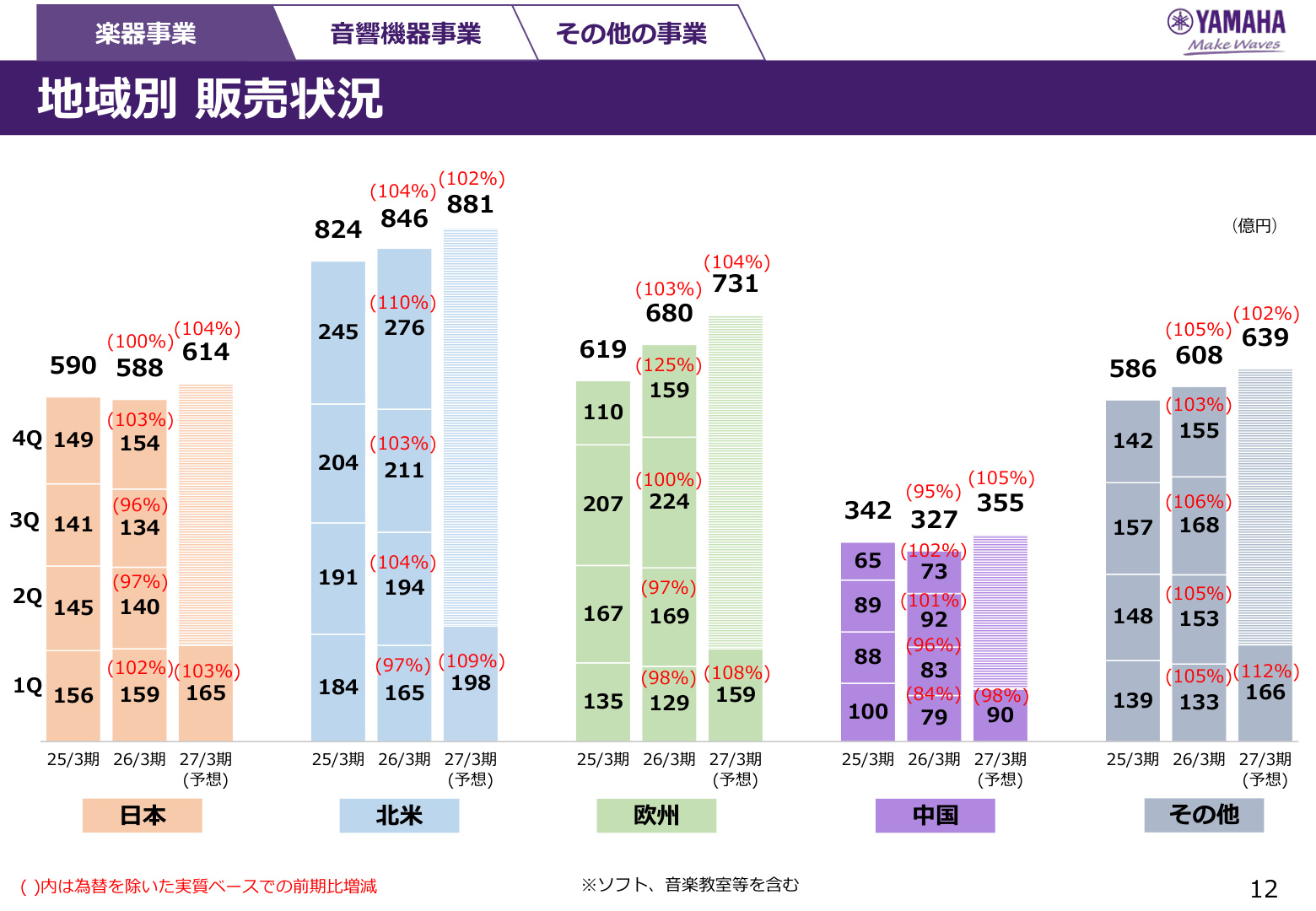
Regional sales trends (see slide above) highlight distinct market environments:
- Japan, North America, and Europe : Major developed markets outperformed the previous year, with North America at 109% , Europe at 108% , and Japan at 103% (currency-neutral). North America and Europe, in particular, benefited from strong performance in new products and electronic instruments.
- China : Recorded 98% (¥9.0 billion) on a currency-neutral basis, reflecting a delayed recovery due to market stagnation. However, the pace of quarterly decline is showing signs of deceleration.
- Other Regions : Markets including emerging economies recorded double-digit growth ( 112% currency-neutral), providing strong overall support.
Audio Equipment: Professional Audio Remains Resilient
- Revenue : ¥35.0 billion (+6.1% YoY / -2% on a currency-neutral basis)
- Core Operating Profit : ¥2.8 billion (+21.7% YoY / Core operating margin 8.1% )
While consumer audio saw a decline due to sluggish home audio sales, professional audio remained resilient, driven by growth in speaker sales. In mobility audio, demand declines in China were offset by growth in other regions, resulting in double-digit organic revenue growth . New product launches, such as mixers, are scheduled from the second quarter onwards, with the segment aiming to return to a growth trajectory for the full year.
Other Businesses
- Revenue : ¥3.7 billion (-15.9% YoY)
- Core Operating Profit : ¥0 billion (down from ¥3 billion in the previous year)
Demand for automotive interior components and factory automation (FA) equipment declined. While revenue is expected to decrease for the full year due to the planned exit from the golf equipment business, improvements in profitability are anticipated through growth in FA equipment.
4. Full-Year Forecast and Topics
For the fiscal year ending March 2027, Yamaha maintained its revenue and core operating profit forecasts from May 2026, while upwardly revising its net profit forecast.
- Revenue (Forecast) : ¥490.0 billion (+5.3% YoY / +3.1% currency-neutral)
- Core Operating Profit (Forecast) : ¥38.0 billion (+19.2% YoY / Core operating margin 7.8% )
- Net Profit (Forecast) : ¥31.0 billion (upward revision from previous forecast, +30.7% YoY)
The upward revision in net profit is primarily due to the receipt of US tariff refunds . The full-year exchange rate assumptions are set at ¥155 per USD and ¥180 per EUR , with a ¥1 fluctuation estimated to impact core operating profit by approximately ¥110 million for the USD and ¥410 million for the EUR.
5. Capital Efficiency, Shareholder Returns, and Mid-to-Long-Term Strategy
Under its mid-term management plan, "Rebuild & Evolve," Yamaha is advancing structural reforms and rebuilding its growth foundation.
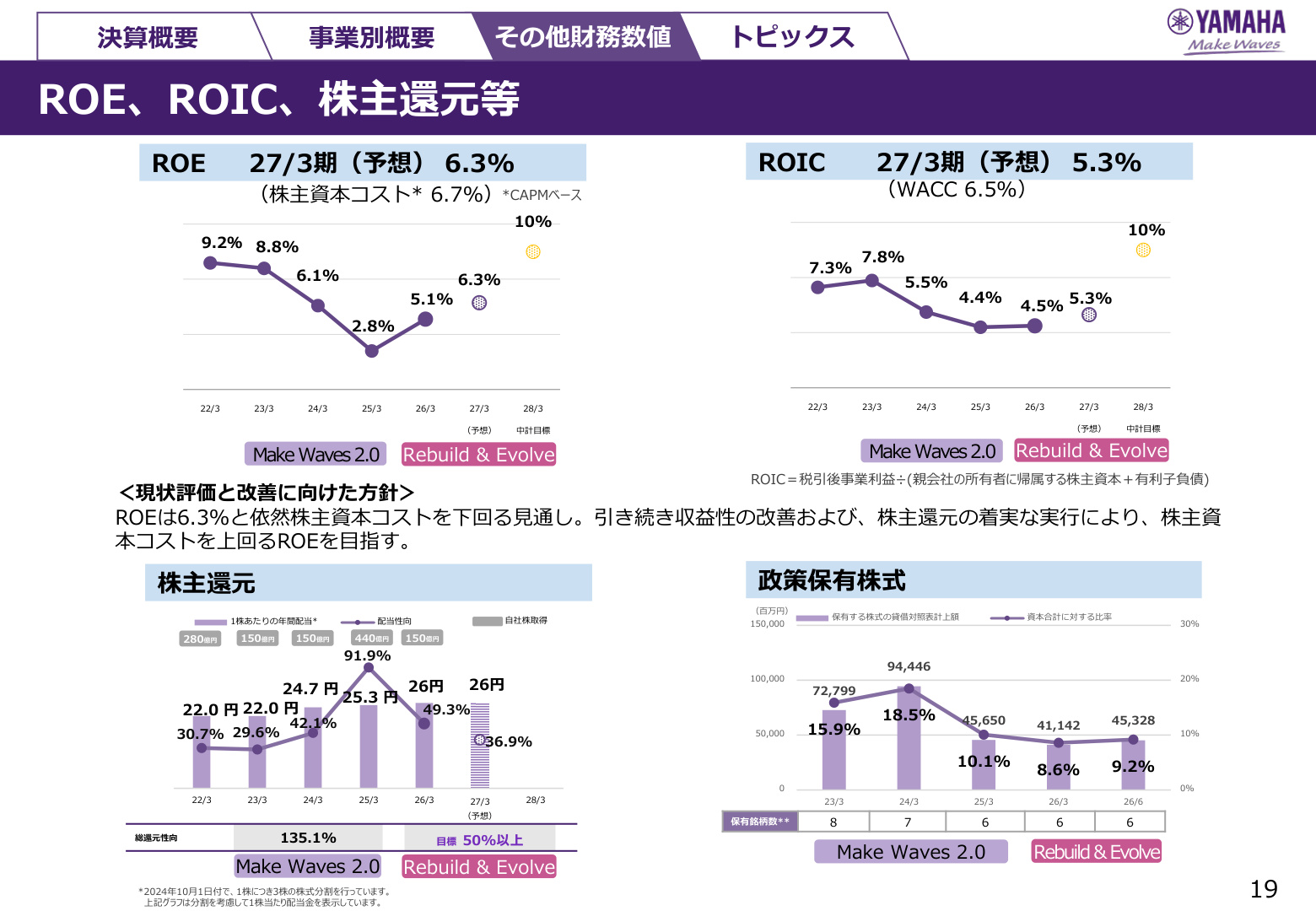
The slide above summarizes the company's ROE, ROIC, shareholder return policy, and the status of cross-shareholding reductions.
- Capital Efficiency (ROE/ROIC) : Projected ROE for FY2027 is 6.3% (expected to remain below the 6.7% cost of equity), with ROIC estimated at 5.3% . The company aims to achieve an ROE exceeding the cost of equity (10% target in the mid-term plan) through improved profitability and optimized capital efficiency.
- Shareholder Returns : The company has set a target of a total return ratio of 50% or more over the three-year mid-term plan. The annual dividend for FY2027 is planned at ¥26 per share (payout ratio of 36.9%), with further returns promoted through flexible share buybacks.
- Reduction of Cross-Shareholdings : The ratio of cross-shareholdings to total equity has further decreased from 10.1% in the previous year to 9.2% (6 holdings), reflecting progress in asset efficiency.
- Cash Allocation : The company expects a cash inflow of ¥170 billion plus alpha over three years, with plans to allocate ¥60 billion plus alpha to strategic investments and ¥60 billion plus alpha to shareholder returns . Key focus areas include market development in India and ASEAN, expansion of the audio business, and sustainability/ESG investments.
Conclusion
In the first quarter of FY2027, despite challenges such as a slowdown in the Chinese market and rising procurement costs, Yamaha demonstrated a significant earnings recovery with a core operating margin of 8.0% . This was achieved through the strength of new products in the electronic musical instruments segment, currency tailwinds, and the execution of price optimization. Moving forward, the market impact of new product launches scheduled from the second quarter and the execution of financial strategies, including the reduction of cross-shareholdings, will be key to further enhancing corporate value.
This content is not intended as investment advice or a recommendation. Any opinions expressed are solely the personal views of each article.