

For Gen X investors, dotcom bubble haunts stock market portfolios closing in on retirement
CNBC
Published: Jul 26, 2026, 11:44 PM GMT+9
Sentiment Analysis
For Gen X investors, dotcom bubble haunts near-retirement portfolios. Gen Xers are now at an age where the need to accumulate wealth in retirement plans is getting closer to overlapping with the in-retirement phase of needing to draw on stable investment income. Many Gen Xers remain underfunded, and a longer runway to retirement may be needed, but it opens up the risk of being caught in an ill-timed market crash. After the dotcom bubble burst, the value of Amazon shares took roughly a decade to recover.
Gen X is the age group — roughly defined as those born between 1965 and 1980 — heavily impacted by the shift from defined benefit to defined contribution pensions, as workplace pensions became less common. Only 14% of Gen X workers have a traditional pension, compared with 56% of boomers, according to research from Alliance's Retirement Income Institute. When broken down by generation, Gen Xers are the least financially prepared generation for retirement by nearly every measure.
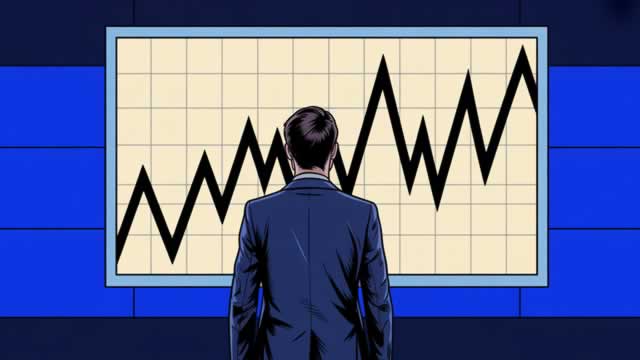
The situation can leave a Gen Xer to watch their retirement fund warily. A decade of strong returns has placed many investors, particularly those a few years out from retiring, heavily weighted in S&P 500 mutual funds and ETFs, riding the record stock market gains right up to the cusp of retirement. But history is littered with instances of crashes that, for the unlucky, happen at the worst possible moment. The Amazon dotcom bubble stock chart is a good example. Investors who bought at its 1999 dot-com peak had to wait a full decade before the stock reclaimed that old high, finally breaking through to new records in late 2009. The broader S&P 500 tells a similar slow-road-to-recovery story. After bottoming out in October 2002 following the dot-com bust, the index took nearly five years to climb back to a new high in 2007 — a high that didn't even hold, as the Great Recession erased it almost immediately. Measured from the bottom of that second crash, in March 2009, it took another four years before the S&P 500 finally cleared its old 2007 peak for good, in March 2013.
Depending on how you count it, that's anywhere from four to thirteen years of being underwater, all depending on which crash and which trough you're measuring from. And for someone three to five years from retirement, that's not an academic timeline. Certified financial planner Ernie Cave, founder of Cave Wealth Management, says that what goes down will ultimately go up, but when matters to retirees. "History shows that markets recover, but retirees don't get to choose whether that recovery takes one year or several. If you're forced to sell investments while they...
Source: CNBC
This content is not intended as investment advice or a recommendation. Any opinions expressed are solely the personal views of each article.