

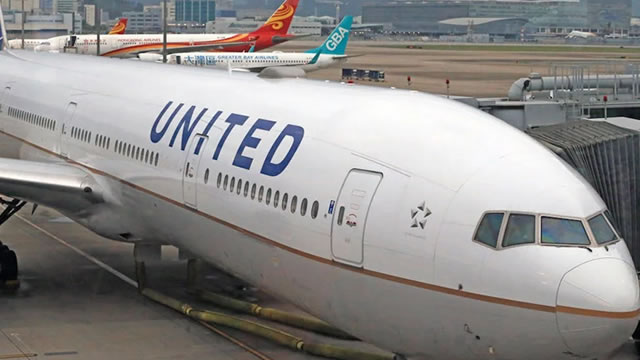
United Airlines Sees Strong Demand, Fare Power as Fuel Costs Rise
MarketBeat
公開日時: Sep 17, 2026, 03:02 PM GMT+9
Sentiment Analysis
Demand remains resilient despite rising jet fuel prices, with strong fourth-quarter bookings, healthy premium-cabin performance and improving economy and corporate travel. United expects to recover higher fuel costs through fare increases, although pricing adjustments will occur with a lag. United is focusing on profitability over market share by cutting lower-margin routes and investing in differentiated products, including premium amenities, lounges, Starlink connectivity and Airbus A321XLR international service. The airline sees potential for 10%+ margins and stronger cash generation if fuel prices stabilize, while targeting free-cash-flow conversion of roughly 75% and significant long-term growth from its Chase co-branded loyalty program.
United Airlines NASDAQ: UAL Chief Financial Officer Mike Leskinen said demand has remained resilient, allowing the carrier and the broader airline industry to raise fares to offset higher fuel costs while continuing to invest in a more differentiated customer experience. Speaking at an investor conference, Leskinen said the airline industry is becoming less commoditized as travelers place greater value on reliability, product quality, premium amenities and inflight connectivity. He said consumers are increasingly willing to spend on experiences, supporting demand across both premium and economy cabins.
“We are not flying to maximize market share,” Leskinen said. “We’re flying to maximize profitability and free cash generation.”
Demand and fuel-price response Leskinen said United has seen “very little evidence” of demand destruction despite rising jet fuel prices. Fourth-quarter bookings have remained “tremendously strong,” he said, while premium-cabin demand has continued to perform well. Corporate travel volumes have also improved, though they remain 4.5 percentage points below the company’s pre-pandemic baseline.
Economy demand and pricing have strengthened as well, according to Leskinen. He attributed that improvement to United’s efforts to enhance the travel experience throughout the aircraft, rather than concentrating investments only in premium cabins. The CFO said higher fuel costs are passed through to customers with a lag, since tickets already booked cannot be repriced. United had about 35% of its fourth-quarter tickets booked at the time of his remarks. He said nothing had changed in the company’s view that it can recover 100% of higher fuel costs over time, subject to that lag.
United has also adjusted its schedule as fuel prices increased, removing some lower-margin routes that no longer meet its profitability threshold. Leskinen said the airline expects to continue making such decisions, including eliminating certain December flights and potentially further changes in 2027 if fuel remains elevated. Third-quarter cost pressure is expected to represent the peak for unit costs excluding fuel, Leskinen said. United expects those costs to decline in the fourth quarter and remain lower in 2027. The company continues to target core cost per available seat mile, excluding fuel, growth of 2% to 3% in 2027.
Premium products and network differentiation Leskinen said United sees room for further pricing gains among airlines that offer a differentiated service. He stressed that fare increases must be supported by investment in a better product, citing improved reliability, customer segmentation, airport lounges and Starlink internet connectivity. United’s introduction of basic Polar...
Source: MarketBeat
個別の投資に関する推奨やアドバイスを提供することを意図しておりません。ここで述べられている意見や見解は、あくまでも各記事の個人的見解です。